Pretty in Pink: The Pink Robin, a Jewel of the Tasmanian Rainforest
The Pink Robin is naturally one of the most sought-after subjects for birders and bird photographers. The male of this species practically glows pink against the dark Tasmanian rainforest.
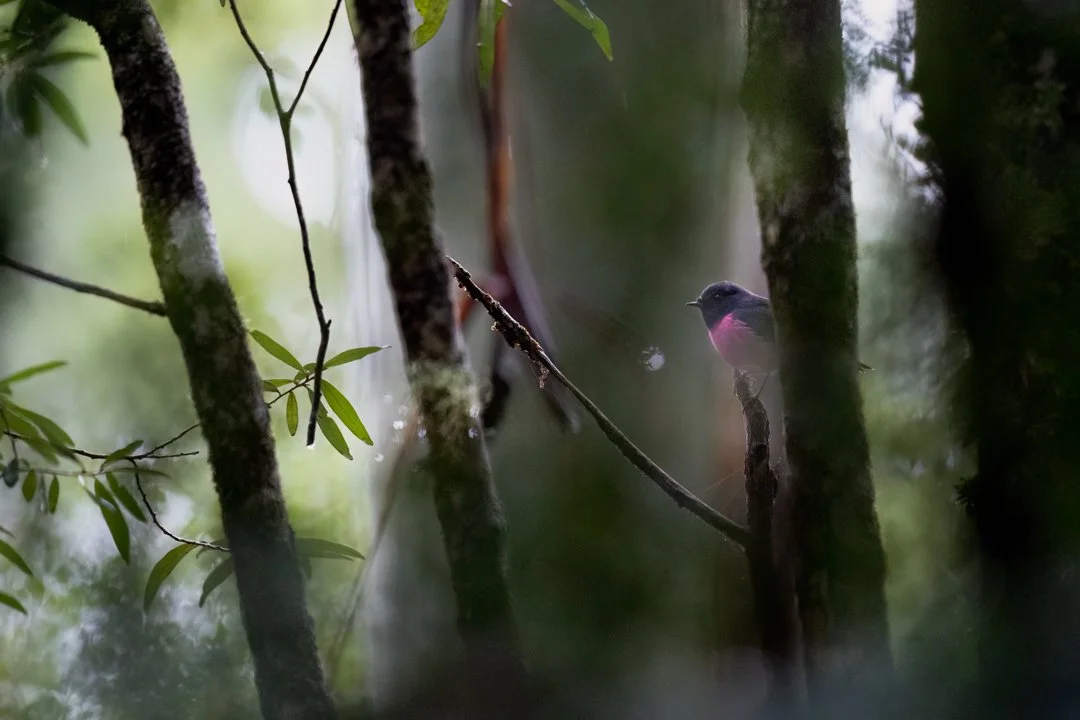
Pink Robin in Tasmania’s wet forests, Mount Field National Park
When people think of rainforests, they often imagine the heat and humidity of the tropics, but this is not the case here. Thanks to the combination of a mild climate with cool temperatures and year-round high rainfall, the west coast of Tasmania is home to one of the richest ecosystems of its kind. Tasmania's temperate rainforest provides ideal living conditions for unique animals and plants. The rainforest and Tasmania's wet eucalypt forests are the perfect and preferred habitat for Pink Robins.
The best time to spot a Pink Robin is early September, when spring hits the Southern Hemisphere. This is generally true for most bird species, as they will be more active and vocal at this time of the year. You would think that males, with their bright pink chests, would be quite easy to spot in these green forests, but it’s not always that easy to get a glimpse of a Pink Robin. These birds prefer densely vegetated gullies in moist forests and are often found near flowing water. Large, dense ferns and moss-covered trees dominate their habitat. However, in spring, they not only stand out with their bright plumage but also with their beautiful songs and calls. When it comes to marking territory boundaries and advertising for a mate, both the males and the ochre-coloured females can be quite vocal. To fend off any rivals, they will zip around the underbrush like little tennis balls to defend their very own patch of forest.
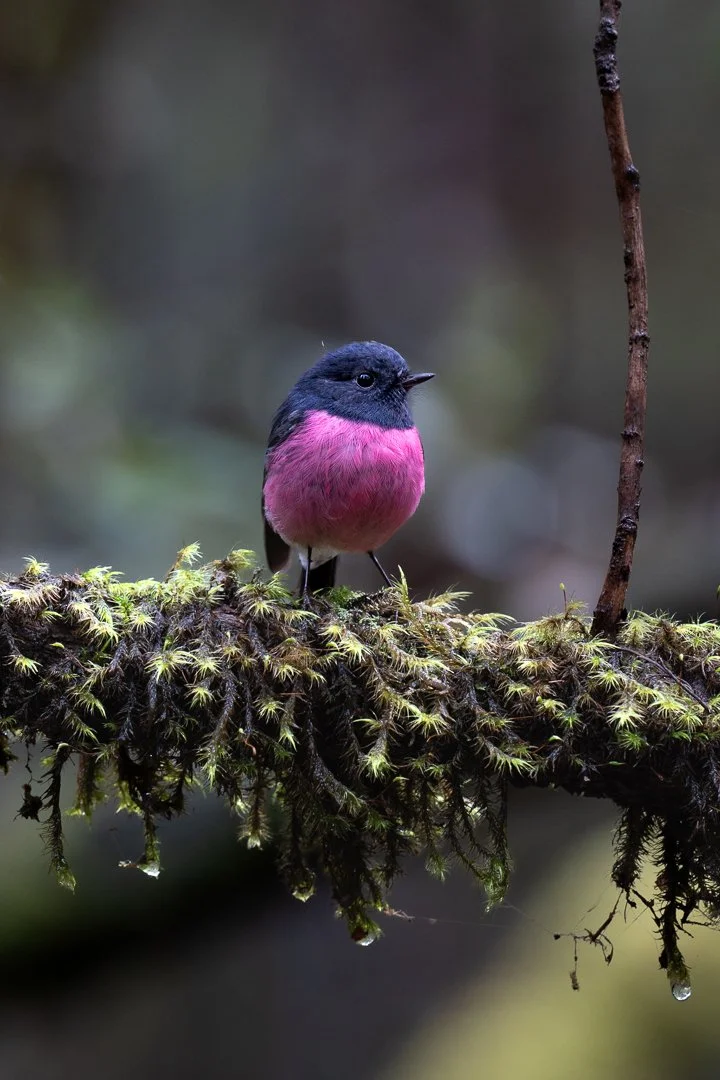
Male Pink Robin proudly displaying his pink front
As an ornithologist, I have a trained ear to identify the songs of different bird species and can tell, with even the faintest "tik, tik, tik" call, that a Pink Robin is nearby. This way, I can position myself with my camera before I even see the birds and wait for them to come closer. This often works better than chasing after them. Pink Robins are more often found close to the forest floor or at eye level while foraging – perfect for photographers and birders.
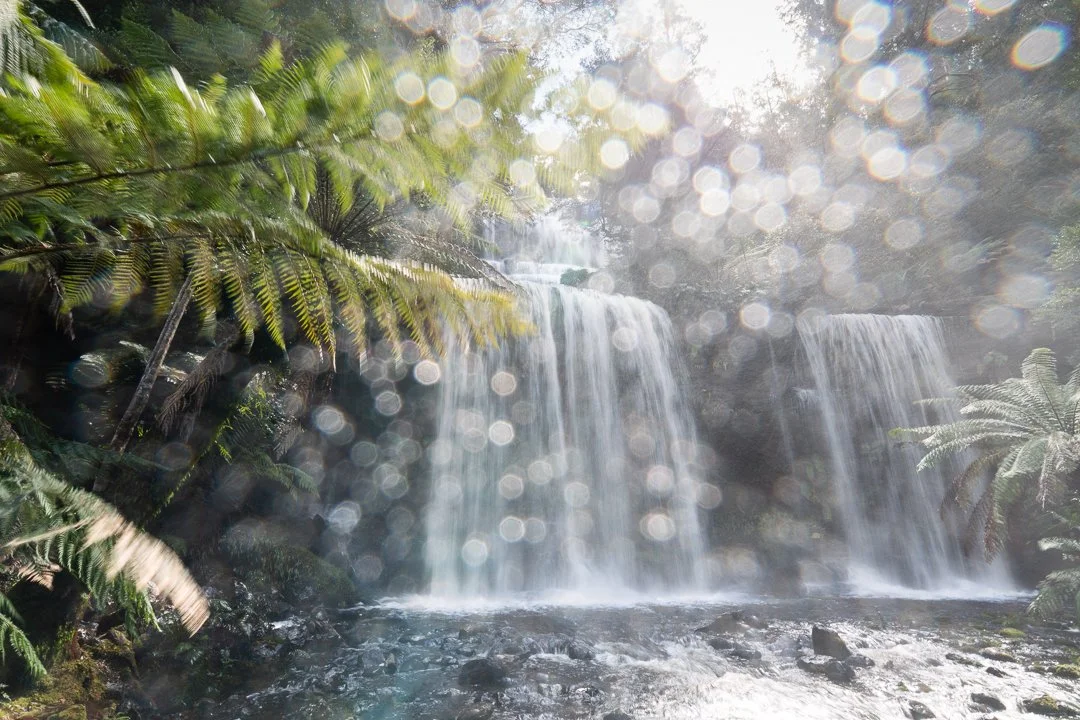
Russell Falls at Mount Field National Park help shape the perfect habitat for Pink Robins
An ethical approach to wildlife photography is also very important to me. When I photograph birds or any other wildlife, I try my best to be a silent and invisible observer. Tasmania’s trails and forests are mostly free from big crowds, but even here, too much disturbance and unethical behaviour by birders and photographers can stress animals to the point where they abandon a nest or their entire habitat altogether. This makes it obvious to me that there is no ethical way or reason to use playback (playing a bird's song on a phone or speaker to attract them) in bird photography. As photographers, we carry even more responsibility to advocate for the long-term wellbeing and protection of the species we interact with. Photography shouldn’t just be a way of collecting trophies for a private collection, but rather a tool to advocate, inform, and inspire.
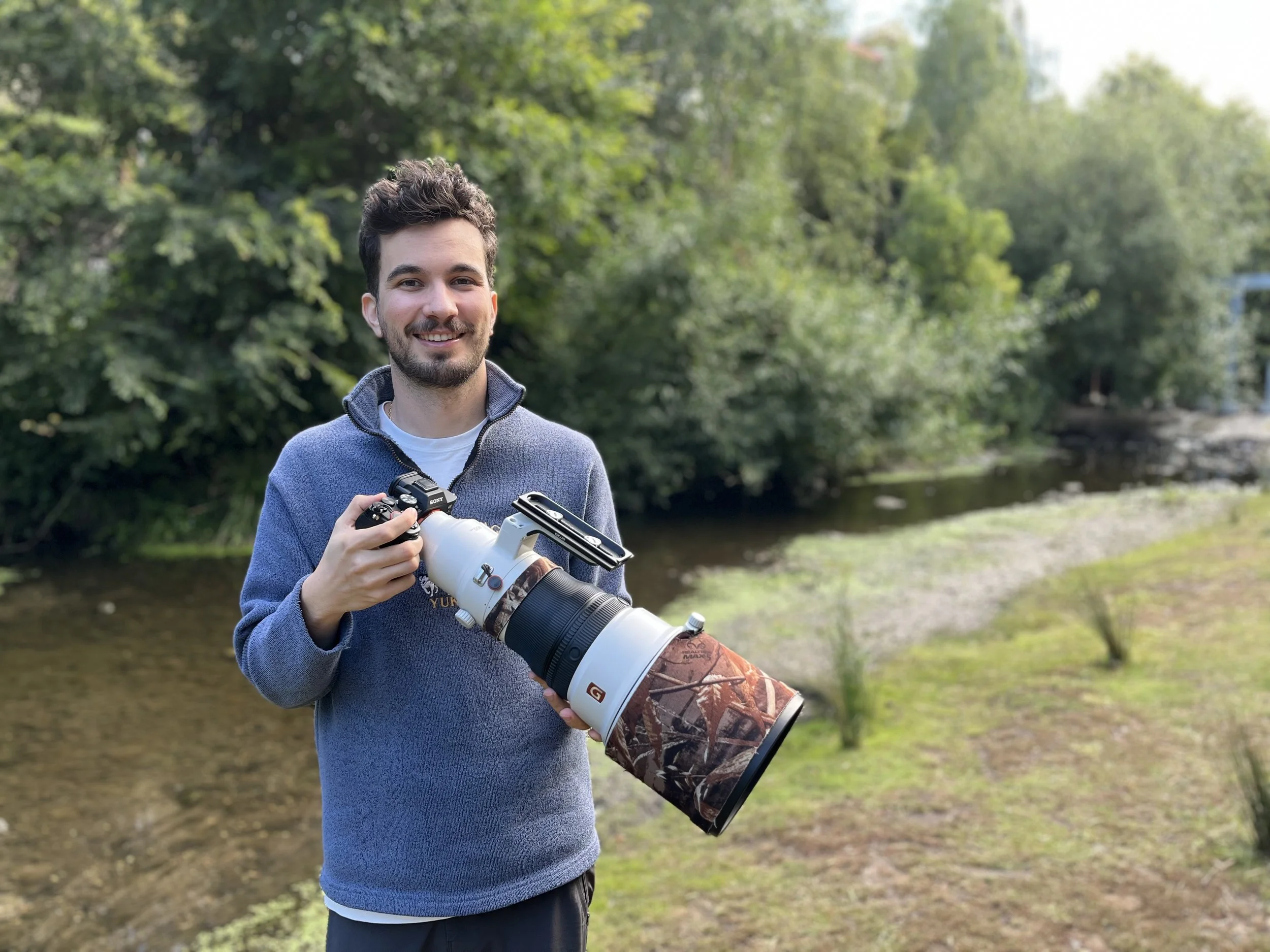
A picture of me near our home along the Hobart Rivulet
About me
In early 2023, I decided to move to Lutruwita / Tasmania with my partner, Kianna. I’m originally from Luxembourg and Kianna’s Canadian, but we now live in the city of Hobart, where I work as a wildlife biologist and lead birdwatching tours, while Kianna works at the university, completing her PhD.